

musicXart
2nd Life - 1st Dream
- an intermedia art project in progress
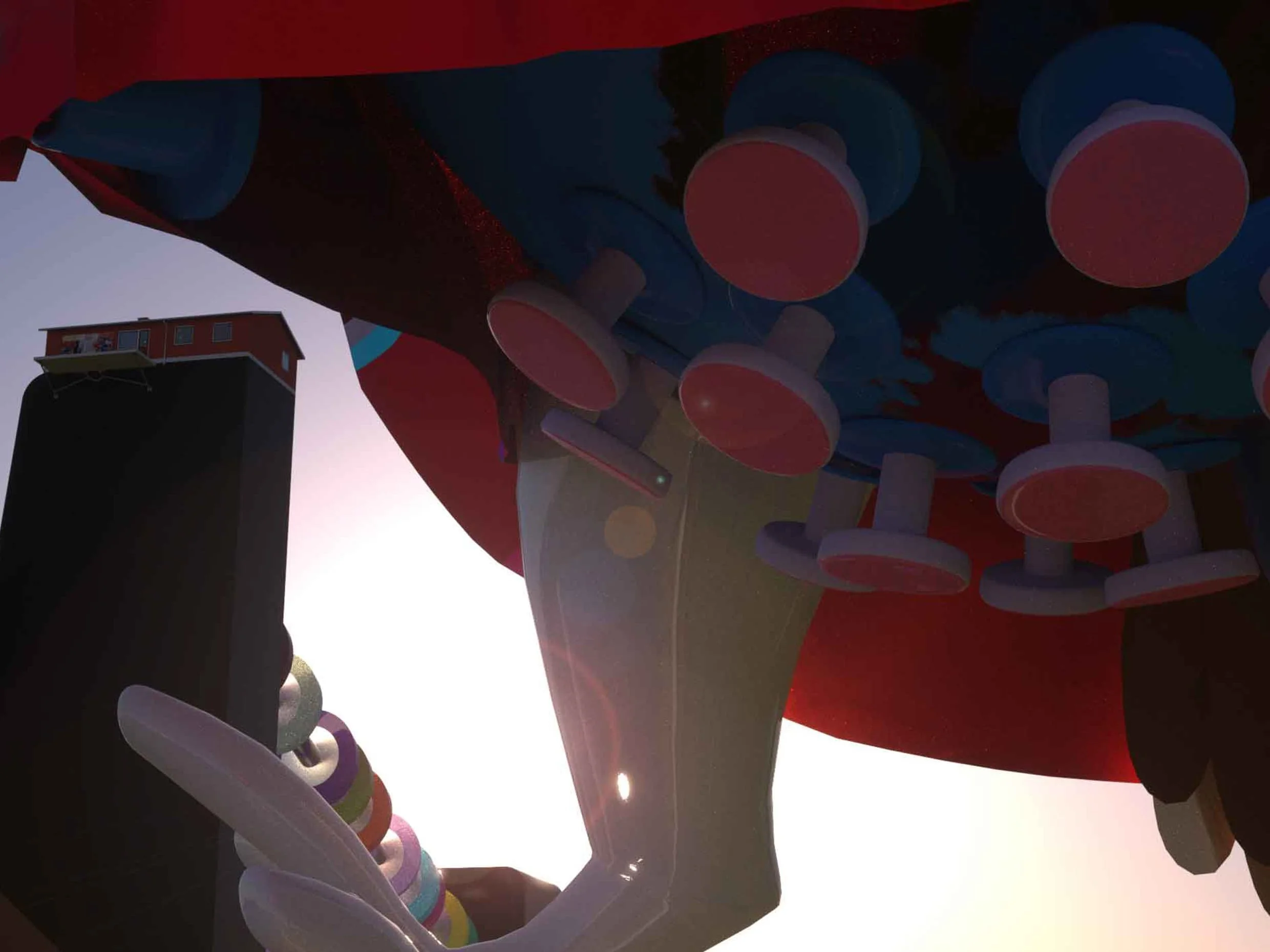
The 2nd Life - 1st Dream project is a virtual world growing out of a 3D-visualization of the Fargo Street painting. The painting's narrative leads us to the PlanAbacus Museum, located at Utsikten, Ekeberg on the east coast of Oslo, where Munch painted The Scream. Here the musicXart project is exhibited in its entirety. The museum has taken over the main building of Roskilde Royal Mansion (1733-36), which for several years (1991-2021) housed the Museum of Contemporary Art with a significant focus on intermedia art. The museum has been expanded with two chapels - Cross Chapel, which constitutes Stockhausen's musical composition Kreuzspiel (Cross Play; 1951) in the form of a tilted cube, located on the site of the real Roskilde Cathedral, and Abacus Chapel, which forms the setting for the Abacus Sound Sculpture (Structures 1a, Boulez). From the chapel’s first floor we have a view, through the stained-glass windows of the West Gallery (Transposition Matrices), of a gigantic version of the Abacus Sound Sculpture in the form of gigantic electricity pylons. They are crowned with the artist’s childhood home (8x16m) in the left panel, and the Balloon Creature and Oslo City in the right panel – a 3D-visualization of the Fargo Street painting.


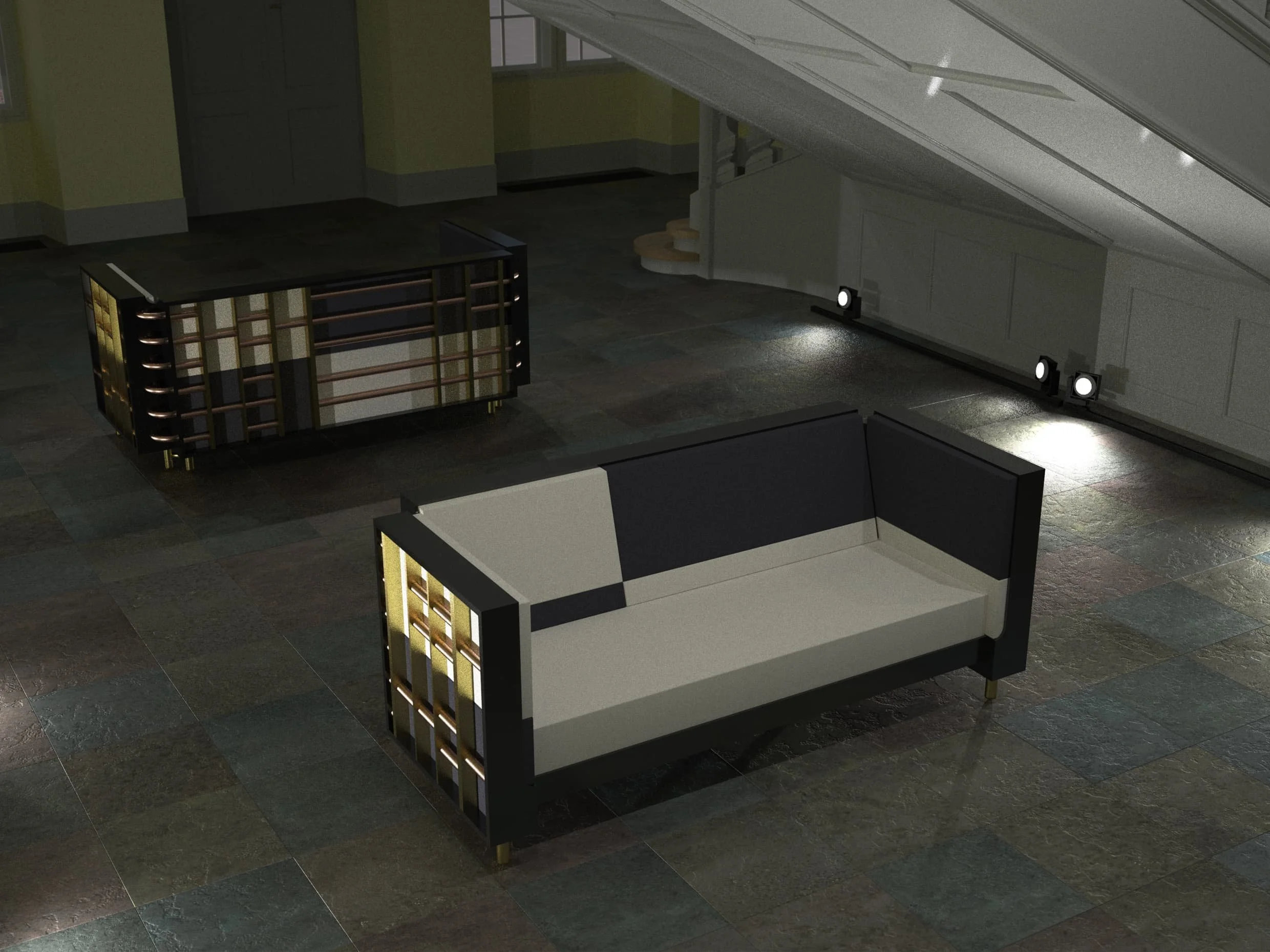
Entrance Hall
The first thing one sees on entering the PlanAbacus Museum is the Triptych Sofa. It is exhibited in the entrance hall in connection with the baroque staircase and mirrored from behind to reveal the vertical-horizontal polyphonic structure of Structures 1a.
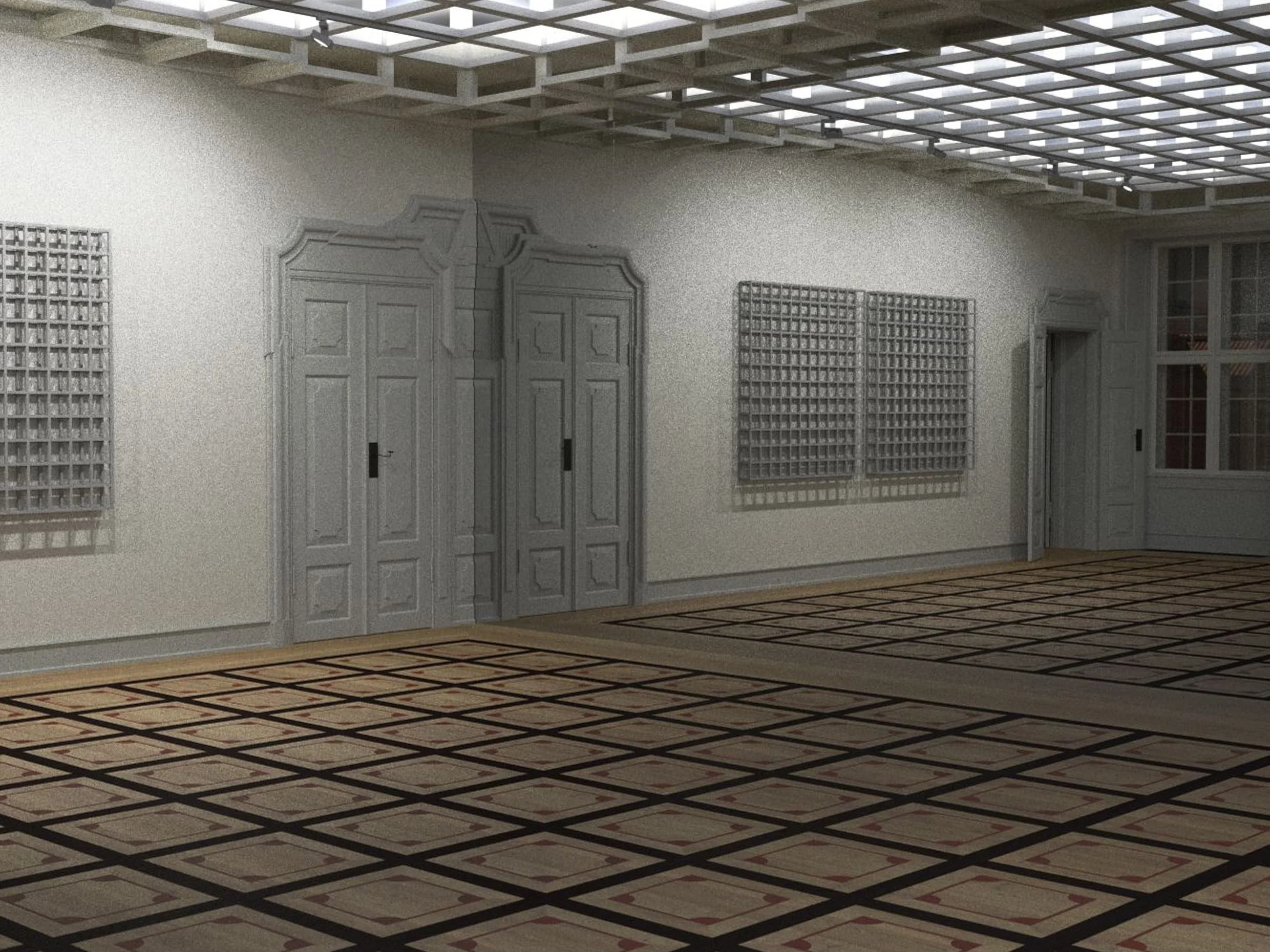
Hall of Mirrors
On the first floor we have the Hall of Mirrors, with reference to the mansion’s royal history. The room is a playful representation of the Transposition Matrices, established by the mirror’s repeating of the parquetry floor, the coffered ceiling and the single side door, that now pretends to be a grandiose entrance. The CD shelving system MWS-1a is installed on the side walls, here without CDs.
Abacus Chapel
This gramophone-like extension of the main building serves solely as a chapel for the Abacus Sound Sculpture. The roof represents a giant “sound block” with a “sforzando-shaped” (series of attacks) dome, through which you have a top view of the sculpture. The dynamics are implied in the form of twelve progressively growing rings in the ceiling (pppp → ffff).
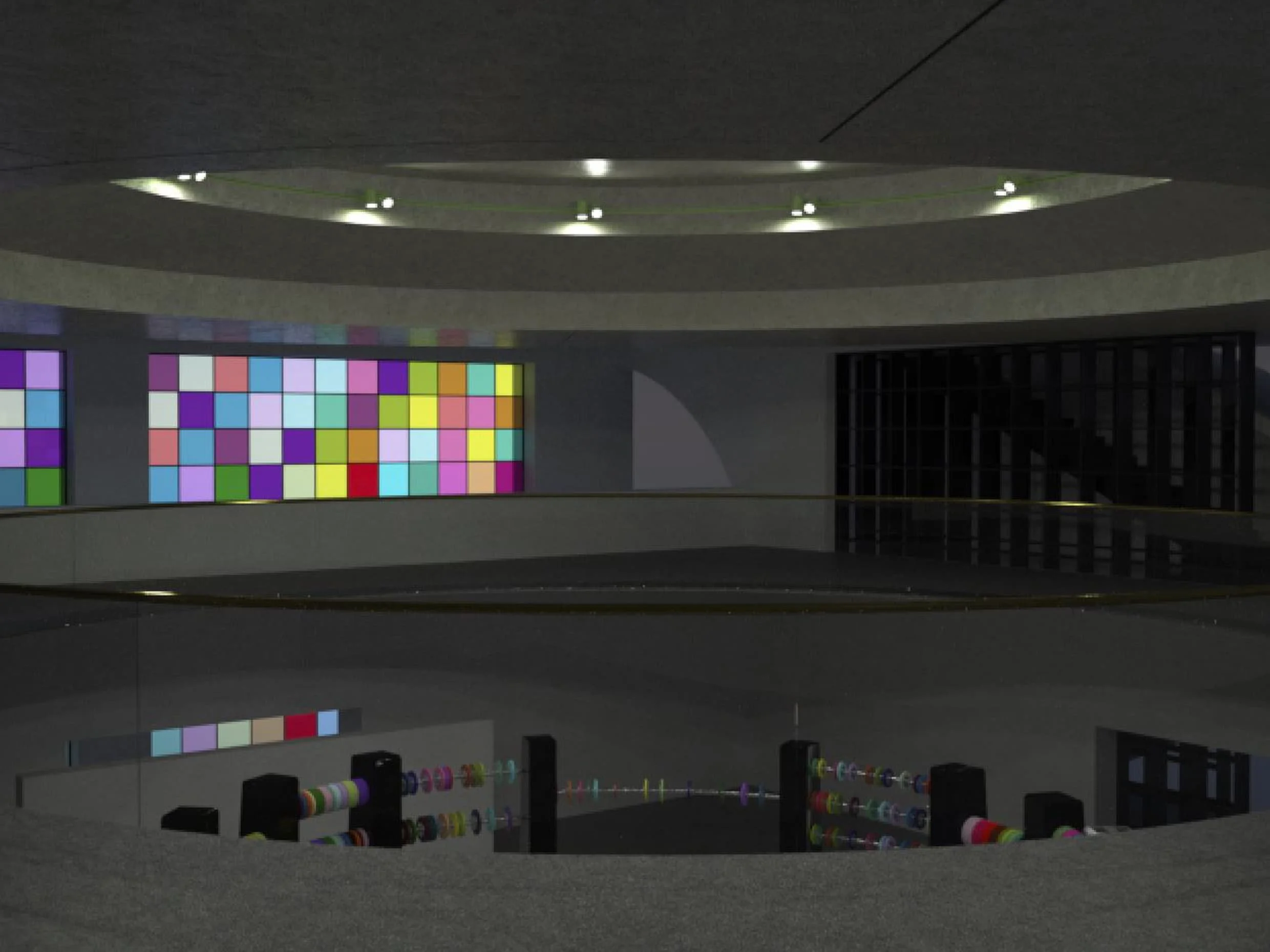
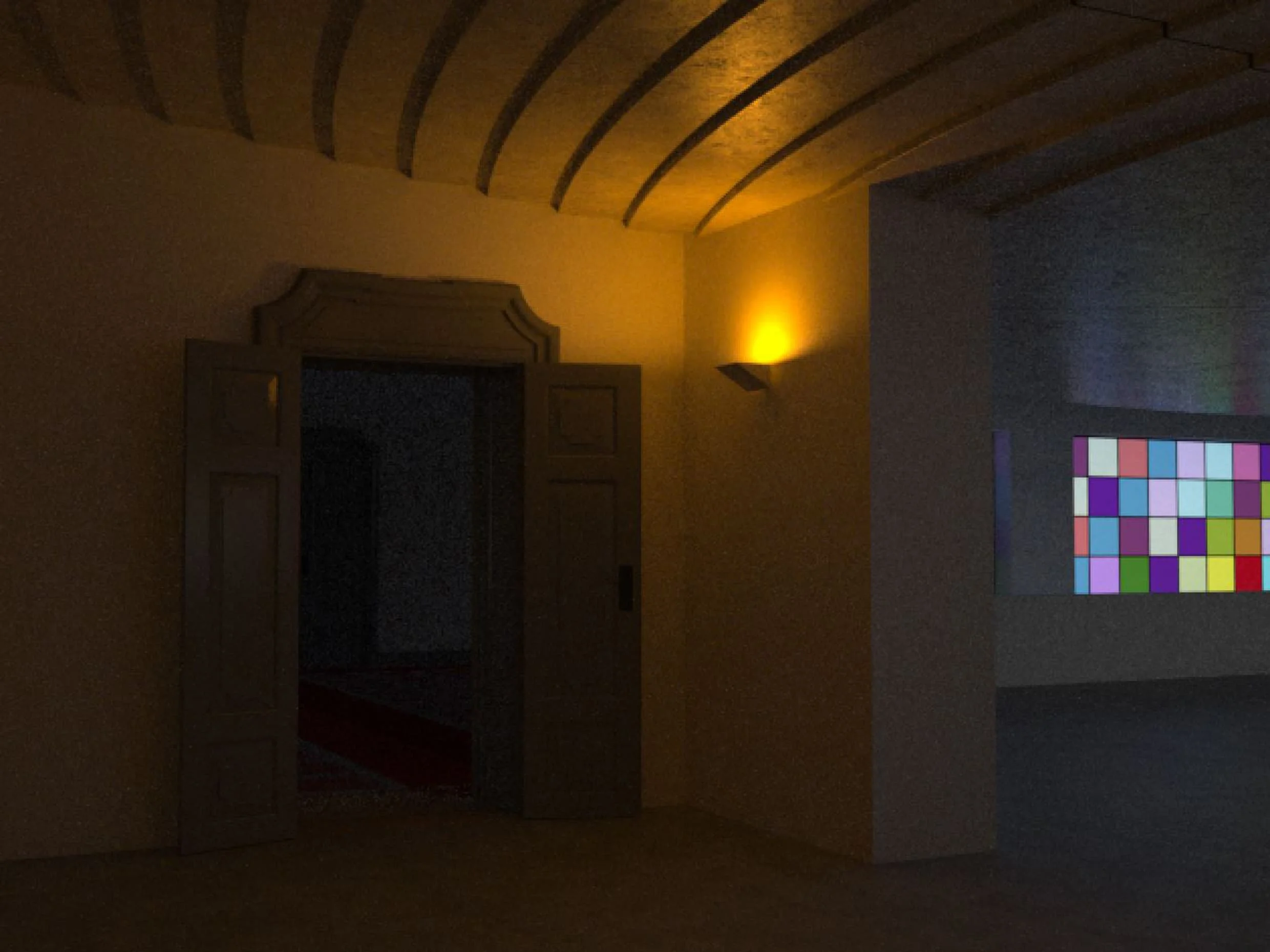
The Transposition Matrices play a central role in the overall architecture. The pitch series is represented in the stained-glass windows of the East and West galleries, while the cast iron lattice structure serves as a division to the staircase leading to the roof terrace. The matrices are repeated outside as an espalier for climbing plants on the north wall, the shape of which is reminiscent of the crossing composition principle.


Artist’s Residence & Café Munch
It has been crucial to the art concept that real-world dimensions have been strictly applied to the virtual world. Following this rule, it has been possible to install the artist’s Copenhagen apartment on the top floor of the main building with direct access to the roof terrace of the Abacus Chapel. The rest of the top floor houses Café Munch.
